
Religious Education
Intent
Religious Education has an important role for the development of pupils’ spiritual, moral, social and cultural development. It encourages respect and broadmindedness towards others with different faiths and beliefs and encourages pupils to develop their sense of identity and belonging through self-awareness and reflection. The principle aim of RE is to engage pupils in an enquiry approach where they can develop an understanding and appreciation for the expression of beliefs, cultural practices and influence of principle religions and worldviews in the local, national and wider global community.
Implementation
Religious Education is implemented through the Leicestershire Agreed Syllabus, which provides a carefully sequenced programme of study from the Early Years through to Year 6. The syllabus ensures pupils systematically build substantive knowledge of religions and worldviews alongside the disciplinary skills of theologians, philosophers, and social scientists.
Teaching is structured around the key enquiry questions set out in the Leicestershire scheme. These questions are designed to encourage pupils to explore what people believe, why they believe it, and how beliefs influence the way people live. Lessons are planned so that pupils revisit key concepts, beliefs, and practices across different religions, enabling knowledge to deepen over time rather than being encountered once.
Across all year groups, RE is taught using a balance of the three strands identified within the Leicestershire syllabus: Believing – understanding religious beliefs, teachings, and sources; Expressing – exploring how beliefs are expressed through worship, practices, and symbols; Living – considering how beliefs influence individuals and communities. These strands are revisited regularly to ensure pupils make connections between belief, practice, and lived experience.
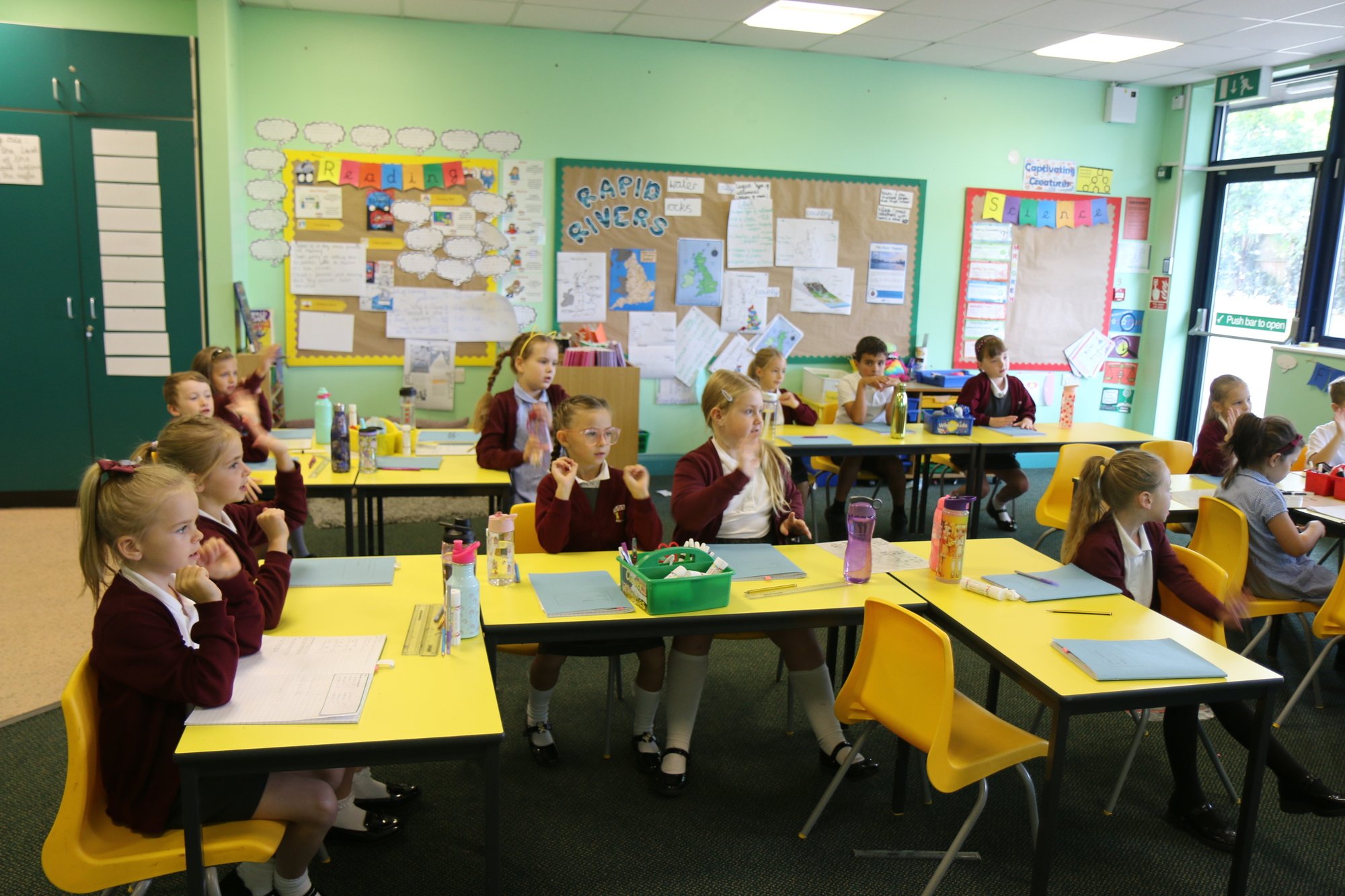
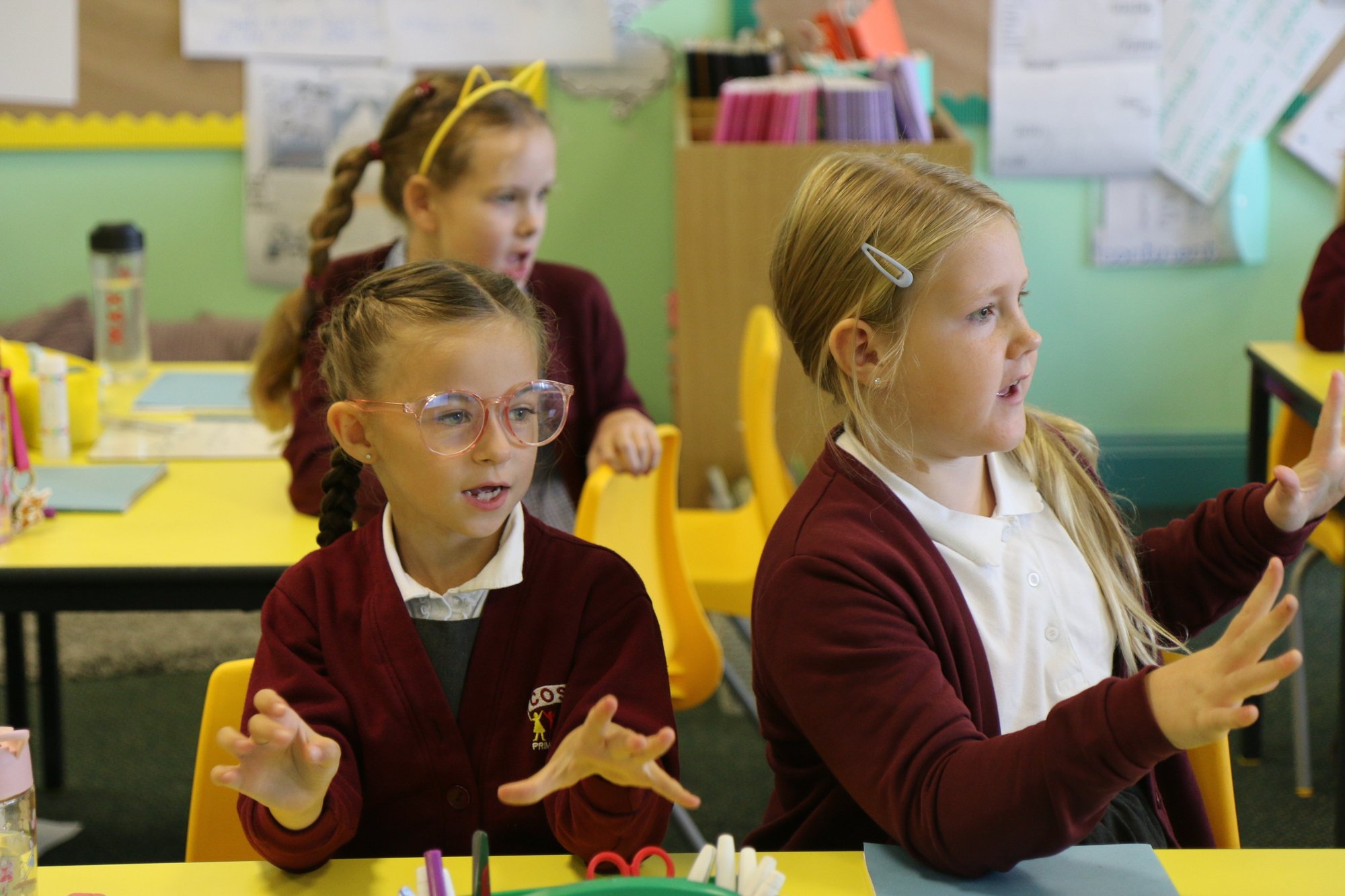
Lessons are enquiry-based and dialogic. Teachers use discussion, questioning, storytelling, artefacts, images, and carefully chosen texts to support pupils in developing secure religious literacy. Pupils are encouraged to express their own ideas, respond respectfully to the views of others, and justify their thinking using knowledge they have been taught.
Progression is carefully planned so that pupils move from simple description and recognition in the early years, to comparison, explanation, and evaluation by the end of Key Stage 2. Knowledge is built cumulatively, with prior learning explicitly revisited and connected to new concepts. Teachers check for understanding through discussion, low-stakes assessment, and written or creative outcomes linked directly to the enquiry question.
RE is inclusive and reflective of the local, national, and global context. Pupils learn about a range of religions and non-religious worldviews, and teaching avoids stereotypes by presenting religions as diverse, lived traditions. Where possible, learning is enriched through visitors, visits, or virtual experiences in line with the syllabus guidance.
Assessment in RE is ongoing and formative. Teachers assess pupils’ understanding by considering how well they can explain beliefs, make connections, and reflect thoughtfully on different viewpoints. This ensures that teaching can be adapted to address misconceptions and deepen understanding.
Through consistent use of the Leicestershire RE scheme, pupils experience a coherent, challenging, and meaningful RE curriculum that equips them with the knowledge and thinking skills needed to understand religion and belief in the contemporary world, while developing respect, curiosity, and empathy for others.
Impact-What will you see?
At Cosby Primary School, we envisage that the RE curriculum will impact on the pupils in the following ways:
• extend their knowledge and understanding of religions and beliefs so that they can: describe, explain and analyse beliefs and practices, recognising the diversity which exists within and between communities and amongst individuals.
• develop a religious vocabulary and interpret religious symbolism in a variety of forms
• reflect on questions of meaning, offering their own thoughtful and informed insights into religious and secular world-views
• explore ultimate questions of beliefs and values in relation to a range of current issues in an ever-changing society
At Cosby Primary School, we follow the agreed syllabus for Leicestershire with decisions made at a school level about the knowledge and understanding we see as most important to our children.
For parents who wish to know more about academies and the teaching of RE or those who have questions about withdrawing their child, please read the following documentation:
Religious education (RE) and collective worship in academies and free schools - GOV.UK
Please contact the school if you need any further information or discussion.